HPV Mapping Branch
Build an HPV reference and quantify viral counts from scRNA-seq FASTQs
What it does
This workflow adapts Cell Ranger to detect HPV reads from host single-cell RNA-seq FASTQs. It covers HPV reference construction, Cell Ranger parameter changes for viral genomes, and count-matrix generation against the viral reference.
When to use it
Use this workflow when the biological question is whether viral transcripts are detectable in single-cell data and you need a viral expression matrix rather than only host-gene counts. It is a preprocessing branch for viral alignment, not a downstream clustering tutorial.
Prerequisites
- Source folder:
scRNAseq_HPV_branch - Main files:
- Required inputs:
- host scRNA-seq FASTQ files
- the correct HPV reference genome
.fna - a matching HPV annotation
.gtf
Steps
Build a Cell Ranger-compatible HPV reference
The README first walks through unpacking Cell Ranger and using cellranger mkref after manually editing the viral annotation so the third column uses exon rather than CDS.
$tools/cellranger-7.1.0/cellranger mkref \
  --genome=hpv_ref_genome \
  --fasta=path/to/hpv.fna \
  --genes=path/to/hpv.gtf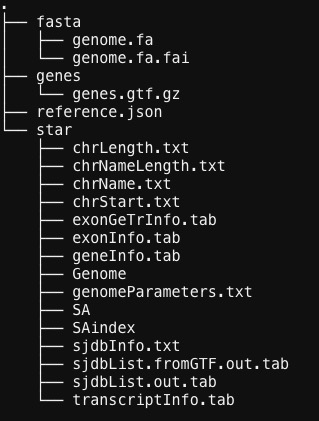
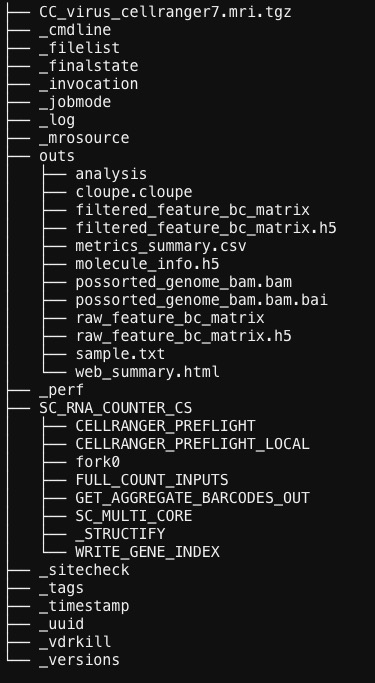
Inspect the output matrix layout
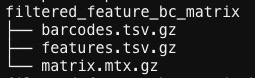
The README shows the expected output folder and where to find the viral feature-barcode matrix for downstream R or Python analysis.
Gotchas / notes
- Choosing the correct HPV type is essential; the README explicitly warns that many distinct HPV genomes exist.
- The sample prefix passed to
--samplemust match the FASTQ filename prefix. - The committed paths assume OSC-style storage and a modified Cell Ranger install dedicated to viral mapping.
- This branch produces a viral gene-expression matrix only; downstream host-plus-virus interpretation is outside the scope of the committed materials.